



Products
Hardening Polyols XH50, XH90
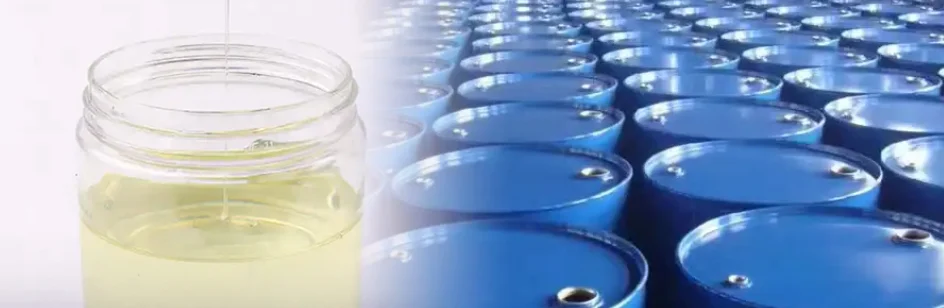
EXAHARD® is a range of medium viscosity polymer polyols specially designed to increase the hardness of flexible polyurethane foams. These are polyether polyols made with a UNIQUE FRENCH TECHNOLOGY based on different copolymers together with high functionality polyols. They allow improving hardness of foam and its production cost while maintaining good physical properties.



Advantages
- High increase in the hardness of foam
- Reduction of manufacturing cost by lowering the TDI index and/or foam density

Polyols
Polyols can be either polyether polyols or polyester polyols. Polyether polyols are made by the reaction of epoxides with compounds having active hydrogen atom. Polyester polyols are made by the polycondensation reaction of multifunctional carboxylic acids and polyhydroxyl compounds. They can be further categorized according to their end use. Higher molecular weight polyols with molecular weights from 2000 to 10,000 are used to make more flexible PUs, while lower molecular weight polyols are used for making more rigid products.
Polyether polyols are key components used in the production of polyurethanes. Polyether-based polyurethanes exhibit enhanced hydrolytic stability and excellent resistance to weak acids and bases compared to polyester-based polyurethanes. Polyether polyurethane can be divided into soft foam polyether, rigid foam polyether and elastomer with polyether according to performance of polyether products. However, polyether-based polyurethanes are more susceptible to UV radiation and provide poor resistance to oils and fuels compared to polyester-based polyurethanes.
The consumption of polyether used in PU is more than 80%. Polyether polyurethane can be classified
- Polyether Polyol (PPG), (Conventional Polyol)
- Polymeric Polyol (POP), (10%, 25%, 45% Solids)
TDI
Toluene diisocyanate (TDI) is an aromatic diisocyanate that is a clear, pale yellow liquid with a sharp, pungent odor, which is insoluble in water and miscible with most common organic solvents. TDI (CAS No. 26471-62-5) consists of two isomers: toluene-2,4-diisocyanate (2,4-TDI) (CAS No. 584-84-9) and toluene-2,6-diisocyanate (2,6-TDI) (CAS No. 91-08-7), which is commercially produced in different ratios. The most common ratio is 80% 2,4-TDI/20% 2,6 TDI.
MC METHYLENE CHLORIDE
Dichloromethane (DCM) or methylene chloride is a volatile, colorless liquid with a chloroform-like odor. When methyl chloride or methane reacts with chlorine gas at very high temperatures (400–500 °C) DCM is produced. DCM is extensively used in numerous industrial settings, e.g., in paint stripping, pharmaceutical and paint remover manufacturing, degreasing, strippers, blowing agent in PU industry and metal cleaning agent.
PU Additives
Silicones
Silicone surfactants are a class of surfactants with polydimethylsiloxane as their hydrophobic backbone and one or more organosilicon polar groups attached to their intermediate or end positions.The Si-O bond energy of the hydrophobic group in its structure is higher than the C-C and C-O bond energies of traditional carbon chain surfactants, which makes it more hydrophobic and stable; its large molecular weight and multi-branched structure make it have excellent low-temperature performance and compatibility, and it is an efficient surfactant.

Stannous Octoate
Tin(II) 2-ethylhexanoate, commonly referred to as stannous octoate (Sn(Oct)2), is the most frequently used catalyst in the ROP and copolymerization of cyclic heterocyclic monomersincluding cyclic carbonates due to a high activity as well as an approval by the American Food and Drug Administration (FDA) as a food additive. The mechanism of polymerization with its contribution has been widely discussed. Sn(Oct)2 is not thought to be the actual initiator since the molecular weight does not depend on the monomer/Sn(Oct)2 molar ratio. T-9 or SO, is the common used names for Stannous Octoate in Flexile PU Foam Industry.
Amine
Amine catalysts are used to control and/or balance both mthe gelling reaction and the gas-forming or foaming reaction responsible for foam formation. Although several organometallic compounds or salts may be used as catalysts in the production of polyurethanes, many polyurethane manufacturers use either tertiary aliphatic amines or alkanolamines. Amine catalysts are typically 0.1 to 5.0 percent of a polyurethane formulation

Adhesive
FIELDS OF APPLICATION
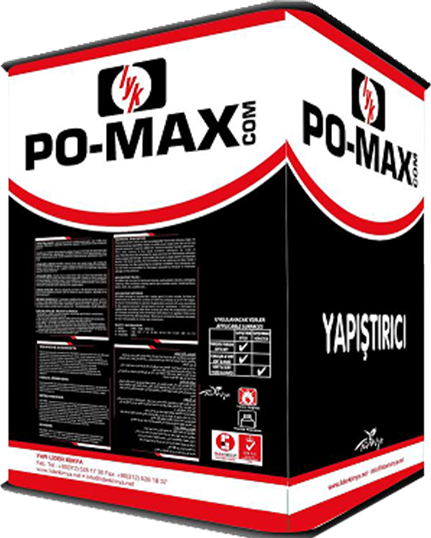
POMAX Adhesive is used in bonding of foam on foam, foam on wood, foam on felt, foam on fabric, foam on metal and foam on plastic, felt on felt, fabric on fabric in Furniture Industry, Spring Bed (Mattress) Industry, Office Furniture Industry. For labor safety and health, working environment must be properly ventilated. Our company is not responsible for losses and damages arising from improper storage or use of the product.
APPLICATION METHOD
POMAX Adhesive is applied on single surface (or double surface if desired) by a spray gun (with 1.8 mm nozzle) as a thin film under 3-6 bar air pressure. After application wait for a short time for evaporation of solvent. This period changes according to the amount applied, room temperature, and air ventilation. Surfaces on whicih POMAX adhesives are applied must be bonded together within 3 minutes; otherwise the desired result cannot be attained. As correction is impossible, bonding should be faultless.

PMDI and Prepolymer MDI
Polymeric Methylene Diphenyl Diisocyanate (MDI) is used in the manufacture of various products, including rigid foam, semi-rigid foamand CASE, and as a binder in reonded foam production. Polymeric MDI is classified into a variety of grades according to viscosity, among which users can choose the most suitable for their purposes.
It is commonly known that PMDI is usede in the reonded foam industry as a binder and to increase the hardness of the blocks.
On the Other hand, PrePolymer MDI, is used as a binder I n rebounded foam industry and to increase the flexibility and cross linking which will reduce block breaking.


